In this guide
Quick answer
Sow zinnia seeds 1/4 inch deep, straight into warm garden soil, 1-2 weeks after your last frost. They sprout in 5-10 days and bloom in about 60-70 days. Give them full sun, space them 9-12 inches apart, pinch the tips once, and cut often. They'll flower until the first fall frost.
Zinnias may be the best flower for anyone new to seed. The seeds are big enough to handle, they sprout fast in warm soil, and the plants bloom harder the more you pick. They're also one of the best butterfly flowers you can grow.
Which zinnias to grow
| Type | Height | Best for |
|---|---|---|
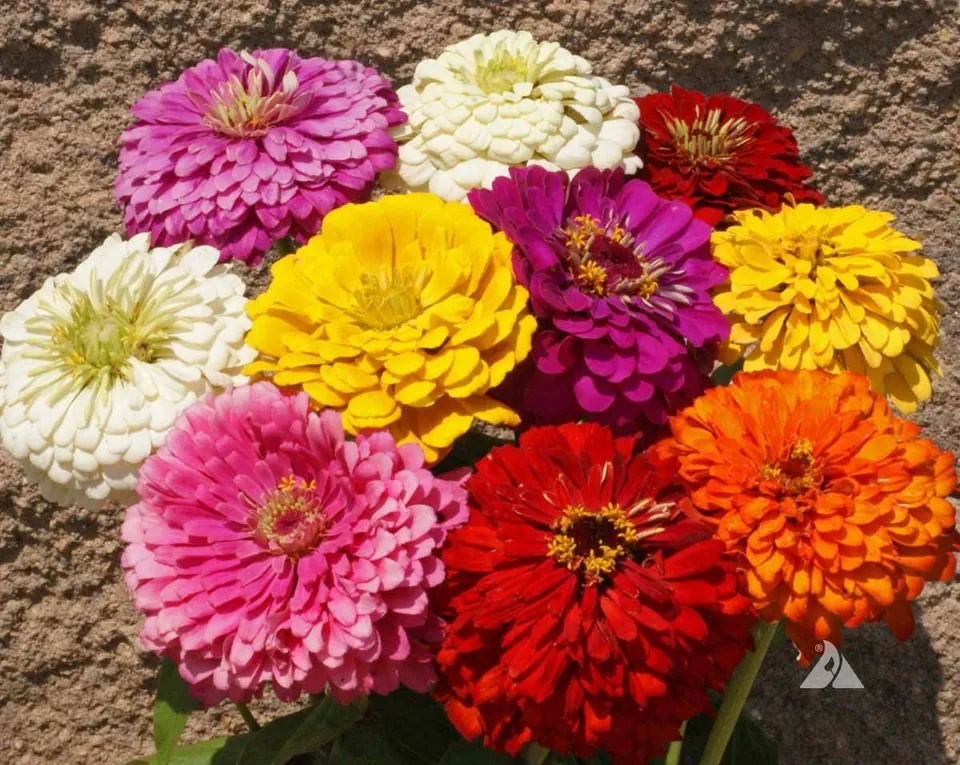
| Dahlia-flowered (e.g. Dahlia Flowered Mix, Purple Prince) | 30-40 in | Cutting, back of the bed |
| Envy (chartreuse green) | 24-30 in | Unusual color for bouquets |
| Thumbelina (dwarf) | 6-8 in | Edging, pots, kids' gardens |
The tall types give long stems for the vase. Thumbelina blooms very young and stays small, so it's the best choice for containers.
When to plant zinnia seeds
Zinnias hate cold. Sow them outdoors 1-2 weeks after your last frost, when the soil feels warm to your hand (about 65°F or more). Seed sown into cold, wet soil tends to rot.
Want earlier flowers? Start them indoors 4 weeks before last frost in individual cells or small pots. Don't start earlier: zinnias grow fast and don't like their roots crowded or disturbed.
For flowers until frost, sow a second short row 4-6 weeks after the first. The second planting takes over when the first plants get tired and mildewed in late summer.
How to sow
- Choose a spot with 6-8 hours of direct sun and decent drainage.
- Sow seeds 1/4 inch deep, 2-3 inches apart.
- Water gently and keep the soil surface damp. Seedlings appear in 5-10 days in warm weather.
- When seedlings have 2 sets of true leaves, thin to 9-12 inches apart for tall types and 6 inches for Thumbelina. Good airflow between plants is your best defense against mildew.
Pinch once for more stems
When tall zinnias are 8-12 inches tall with 3-4 pairs of leaves, cut off the top 3-4 inches just above a leaf pair. The plant sends up 2 or more side branches, each with its own long stem. It delays the first flower by a week or so but roughly doubles what you'll cut. Thumbelina doesn't need pinching.
Watering and feeding
- Water deeply once or twice a week at the base of the plant, not over the leaves.
- Zinnias don't need rich soil. An inch of compost at planting is plenty. Lots of nitrogen fertilizer gives big leaves and fewer flowers.
- A 2-inch layer of mulch after the soil warms keeps moisture even.
How to cut zinnias
- Cut in the morning, deep into the plant, just above a leaf pair. New stems grow from there.
- Use the wiggle test: hold the stem 8-10 inches below the flower and shake gently. If the head stays stiff, it's ready. If it droops, wait a few days or it will wilt in the vase.
- Strip the lower leaves and put stems straight into water. Zinnias last about a week in a vase. Change the water often; they don't like flower food with bleach.
Problems and fixes
- White powder on leaves (powdery mildew): very common in late summer. Space plants well, water the soil not the leaves, remove the worst leaves, and rely on your second sowing. It looks bad but rarely stops blooming.
- Seedlings cut off at ground level: cutworms. A collar of cardboard around each seedling stops them.
- Holes in petals: Japanese beetles in many areas. Hand-pick them into soapy water in the morning.
- Few flowers: not enough sun, or not enough cutting. Spent flowers left on the plant slow it down.
Saving zinnia seed
Leave a few of your best flowers on the plant until the heads are dry and brown. Pull the petals apart; the seeds are the arrow-shaped pieces at the base of each petal. Dry them for a week, then store in a paper envelope somewhere cool and dry. Zinnias cross easily, so saved seed from a mixed bed will give you surprise colors.
Frequently asked questions
Do zinnias come back every year? No. Zinnias are annuals and die at the first frost. In warm areas they sometimes reseed on their own.
Can I grow zinnias in pots? Yes. Thumbelina and other dwarf types do well in pots 8 inches or wider. Tall types need a pot at least 12 inches wide and deep, and a stake.
Why are my zinnia seedlings falling over? Usually damping off from cold, wet conditions, or leggy indoor seedlings reaching for light. Sow outdoors in warm soil, or give indoor seedlings a light 2-4 inches above them.